
Everyday Psychosocial Risk Management
Turning psychosocial policies into everyday psychosocial risk management.
You’ve developed the policies.
You’ve built the framework.
You’ve trained your leaders.
But what do your frontline leaders do when people stuff actually…happens?
A team is overwhelmed by workload. A performance conversation becomes complicated. Conflict starts affecting the work unit. Organisational change creates uncertainty. Or a manager knows something isn’t quite right, but isn’t sure what to do next.
Everyday Psychosocial Risk Management (EPRM) helps organisations bridge the gap between formal psychosocial risk management systems and what frontline leaders actually say, decide and do when work gets complicated.
Because good psychosocial risk management doesn’t just happen in frameworks and formal risk assessments.
It happens where the work happens.
Click here to download the free EPRM paper
You’ve built your psychosocial risk system. Now how do you make it work in the everyday reality of the workplace?
Policies, psychosocial risk assessments, procedures and training all matter. In fact, they are an important part of complying with Australian WHS duties. But having good systems in place doesn’t automatically mean psychosocial risks will be recognised and managed effectively as everyday situations unfold.
That’s the implementation gap.
Frontline leaders operate right in the middle of it. They allocate work, set priorities, manage performance, navigate conflict, lead people through change and respond when someone in their team is struggling.
Those everyday decisions can influence psychosocial risk.
EPRM helps leaders apply a psychosocial risk lens to the work they are already doing, rather than giving them yet another thing to do.
A practical approach to psychosocial risk management
At the heart of EPRM is a simple, continuous cycle:
NOTICE → UNDERSTAND → ACT → REVIEW
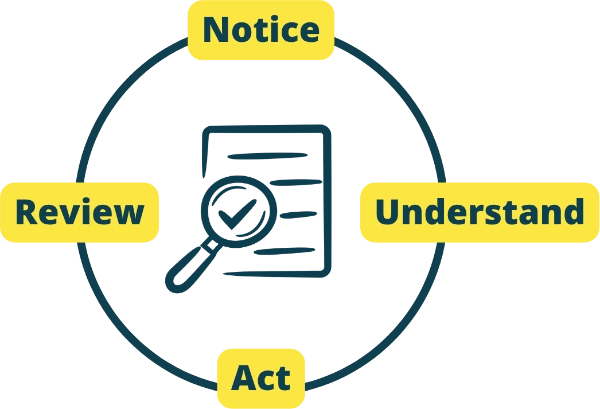
Notice
Recognise changing conditions, concerns and potential psychosocial hazards.
Understand
Explore what is happening, who may be affected and what may be contributing to the risk.
Act
Take thoughtful, proportionate and work-focused action.
Review
Check whether the response is working and adapt when needed.
This approach translates the established WHS psychosocial risk management process into something leaders can apply within the normal flow of work.
EPRM isn’t about turning managers into psychologists or WHS experts.
It’s about helping them understand
what to notice, what to consider, what they can do next and when they need help.
What does this look like in the real world?
People leaders rarely sit down thinking:
“I need to apply our psychosocial hazard control framework.”
Fair enough.
They’re much more likely to be thinking:
“My team is overwhelmed. What can I actually change?”
“This performance issue is getting complicated.”
“There’s conflict in the team and it’s getting worse.”
“People are struggling with this change. What should I be looking for?”
“Do I deal with this myself or call HR?”
These are the moments when organisational frameworks need to become practical leadership action.
And there are no one-size-fits-all solutions.
EPRM supports leaders to think through what is happening, make considered decisions and recognise when additional advice or escalation is needed.
Building capability beyond the training room
We love a good workshop. Obviously. (Oh hey, have you seen our Workplace Training options and Testimonials? Just casually throwing that in there…smooth, right?).
But learning about psychosocial risk management and applying it several weeks later in a messy workplace situation are two different things.
EPRM takes a broader approach to leadership capability by connecting learning with practical application, reflection, tools and ongoing support.
It helps leaders use what they know when real situations arise, rather than relying on a single training event to do all the heavy lifting.
Head Strong can help through:
Leadership development
Practical learning that helps leaders recognise, understand and respond to psychosocial risks as work unfolds.
Practical tools and resources
Conversation guides, checklists, thinking tools and decision aids designed for real workplace situations.
Coaching and advisory support
Coaching support for situations where context, judgement and proportionate decision-making matter.
Organisational implementation
Advisory support for HR, WHS and People & Culture teams translate organisational expectations into practical leadership behaviours and ways of working.
Tailored capability programs
Bringing learning, tools, practical application and organisational support together to build capability over time.
Ready to talk about building EPRM Capability?
Good leadership and good risk management aren’t separate things
Regular one-to-one conversations can help identify changes in workload.
A performance conversation can uncover factors in the work that need attention.
A team meeting can provide meaningful consultation about what’s working and what isn’t.
A conversation about priorities can reveal that people simply have too much competing work.
EPRM helps leaders embed psychosocial risk management into the everyday conversations, decisions and actions that shape how work is experienced.
That’s the point.
Not more process for the sake of process.
Better capability where the work actually happens.
What can EPRM help your organisation do?
EPRM can help organisations:
- translate psychosocial risk frameworks into everyday practice
- strengthen frontline leadership capability
- reinforce learning beyond formal training
- support earlier recognition of emerging psychosocial risks
- provide leaders with practical tools and guidance
- encourage thoughtful and proportionate decision-making
- help leaders recognise when HR, WHS or specialist input is needed
- better connect organisational systems with frontline practice.
In simple terms:
GOVERNANCE AND SYSTEMS → LEADERSHIP CAPABILITY → EVERYDAY ACTION
That is the connection EPRM is designed to create.
Practical tools for everyday leadership
Head Strong has developed practical tools to help leaders move from:
“I know there’s an issue.”
to:
“I have a clearer idea of what to consider and what to do next.”
These tools help leaders:
- check in with teams and understand emerging concerns
- identify changes in psychosocial risk
- prepare for important workplace conversations
- respond to concerns, incidents and complaints
- approach reasonable management action thoughtfully
- identify opportunities to reduce unnecessary job demands
- strengthen the resources people need to work well and stay well
- review whether actions are making a difference.
The aim isn’t to replace professional judgement with a checklist.
It’s to support better judgement.
What EPRM is, and what it isn’t
EPRM provides a practical way for frontline leaders to apply psychosocial risk management principles within the normal flow of work.
It does not:
- transfer the organisation’s WHS duties to frontline leaders
- replace formal psychosocial risk assessment or worker consultation
- replace incident management or specialist support
- ask managers to diagnose mental health conditions
- treat every difficult workplace experience as evidence of harm
- suggest that every concern needs a formal risk assessment or escalation.
EPRM supports leaders to make considered, proportionate and work-focused decisions while recognising what sits within their role and when they need additional support.
Want to dig deeper?
Download the free Everyday Psychosocial Risk Management paper
The paper explores:
- why psychosocial risks emerge through everyday work
- the role frontline leaders play in recognising and managing risk
- the Notice → Understand → Act → Review operating model
- how job demands and resources can support better workplace decisions
- real-world examples of EPRM in action
- practical tools that support more thoughtful and consistent decision-making.
Download for Free
Everyday Psychosocial Risk Management FAQs
What is Everyday Psychosocial Risk Management?
Everyday Psychosocial Risk Management is Head Strong’s practical approach to helping frontline leaders apply psychosocial risk management thinking as work unfolds.
It helps leaders Notice, Understand, Act and Review in response to changing workplace conditions and emerging psychosocial risks.
Is EPRM the same as a psychosocial risk assessment?
No. EPRM does not replace formal psychosocial risk assessment, worker consultation, incident management or other organisational WHS processes.
It helps leaders apply psychosocial risk thinking within everyday leadership and recognise when formal processes or specialist support may be required.
What role do managers have in psychosocial risk management?
Frontline leaders influence many aspects of work that can affect psychosocial risk, including workload, priorities, support, communication, performance management, conflict and responses to emerging concerns.
EPRM helps leaders recognise and respond to these issues on a day-to-day basis within the scope of their role. It also helps leaders to know when some risks or issues should be escalated or additional guidance and assistance sought.
Does EPRM replace psychosocial risk management training?
No. Training can build knowledge and foundational capability, including EPRM knowledge.
However, EPRM takes a broader approach that connects learning with practical application, tools, reflection and ongoing support as workplace situations arise.
Is EPRM only for frontline managers?
Frontline managers, supervisors and team leaders are the primary users of EPRM, but the approach also supports HR, WHS, People & Culture, wellbeing and organisational capability teams seeking to translate psychosocial risk systems into consistent everyday practice.
Is workplace mental health doing your head in?